
Agriculture is the science and art of cultivating plants and livestock. Agriculture was the key development in the rise of sedentary human civilization, whereby farming of domesticated species created food surpluses that enabled people to live in cities. The history of agriculture began thousands of years ago. After gathering wild grains beginning at least 105,000 years ago, nascent farmers began to plant them around 11,500 years ago. Pigs, sheep, and cattle were domesticated over 10,000 years ago. Plants were independently cultivated in at least 11 regions of the world. Industrial agriculture based on large-scale monoculture in the twentieth century came to dominate agriculture output, though about 2 billion people still depended on subsistence agriculture into the twenty-first.
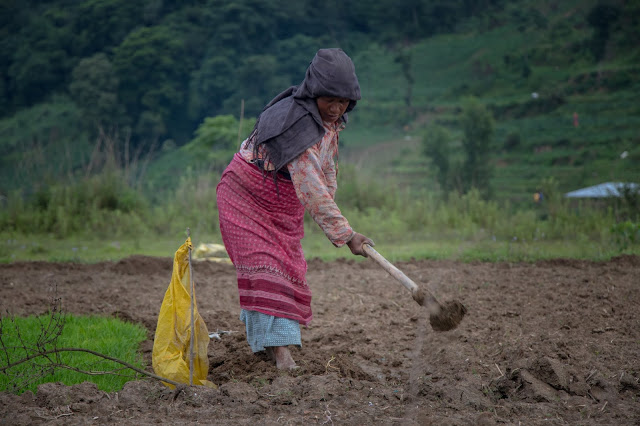
In Nepal, the main economy was agriculture. In the late 1980s, it was the livelihood for more than 90% of the population, although only approximately 20% of the total land area was cultivable, it accounted for, on average, about 60% of the GDP and approximately 75% of exports. Since the formulation of the fifth five-year plan (1975-1980), agriculture has been the highest because economic growth was dependent on both increasing the productivity of existing crops and diversifying the agricultural base for use as industrial inputs.
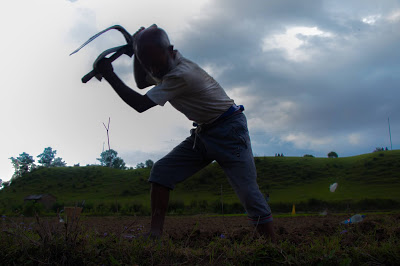
The production of crops fluctuated widely as a result of these factors as well as weather conditions. Although agricultural production grew at an average annual rate of 2.4 percent from 1974 to 1989, it did not keep pace with population growth, which increased at an average annual rate 2.6% over the same period. Further, the annual average growth rate of food grain production was only 1.2% during the same period.
Rice was the most grown crop in Nepal. In 1996 total rice production amounted to more than 1 million tons; by 1989 there were 3 million tons in production. Fluctuation in rice production was very common because of changes in rainfall; overall, however, rice production had increased following the introduction of new cultivation techniques as well as increases in cultivated land. By 1988 approximately 3.9 million hectares of land were under paddy cultivation. Many people in Nepal devote their lives to cultivating rice to survive. In 1966 approximately 5,00,000 tons of corn, the second major food crop, were produced. By 1989 corn production had increased to over 1 million tons.
Other crops such as wheat, millet, barley, coffee, tea, sugarcane, potatoes, oilseed, maize, etc were also cultivated in Nepal. Increased production of cash crops, used as input to new industries, dominated in the early 1970s. sugarcane and tobacco also showed considerable increases in production from the 1970s to the 1980s. potatoes and oilseed production had shown moderate growth since 1980. Medicinal herbs were grown in the north on the slopes of the Himalayas, but increases in production were limited by continued environmental degradation. According to government statistics, production of milk, meat, and fruit had improved but as of the late 1980s still had not reached a point where nutritionally balanced food was available to most people.
out of 2.7 million hectares of agricultural land in Nepal, only 1.3 Mha have irrigation facilities. The majority of irrigation systems are small and medium-scale. A recent study funded by the climate and development knowledge network (CDKN) revealed that about 0.8% of agricultural GDP is being lost due to climate change and extreme events. There is a need to both improve agricultural productivity and make it more resilient to climate uncertainty and change in general. Recent increases in floods and droughts have raised concerns that the climate is changing rapidly and that existing arrangements for irrigation design and management may need to be reconsidered.
The Agricultural condition of Nepal requires modernization, diversification, commercialization, and promotion for growing the crops to sustain the country and increase production in agriculture for the increment of exports. There is a lack of proper education, facilities, equipment, production, transportation, lack of storage facilities, telecommunication, irrigation, market center, and competition for the agriculture infrastructure in Nepal. The government policies put inadequate constraints on agriculture practices which only go to show poor governance. Due to the small productions, obsolete technology, lack of farms managerial skills, fragmented and small-sized land, policy-level constraints, and lack of information about modern agriculture.
The government should promote the agricultural sector of Nepal and implement new policies regarding benefits for agriculture. Also, provide a modern education for modern agriculture and equipment for agriculture. The private sector should be active in the promotion of commercial farming, focus on the export of quality goods, and maintain marketing networks. There should be more focus on market-oriented and competitive agriculture. the economy of a country plays a vital role in the development, production is stagnant and we are relying more and more on imports. Production should be more and more in agriculture so it can be exported and modern technology should be used for the more production of the crops.
Nepal is an agro-based country. More than 66% of the people are engaged in agriculture. Agriculture helps in the national income of a nation. In the present situation, people are following a different modern technique for the development of agriculture. About 40% of national income is dependent on agriculture. Tractors are used in land and different types of organic fertilizers are used in cultivating crops. The agriculture system has been changed because education is provided for the betterment of the crops.
 College's Blog